How Nostos VR explored ways to extend a local exhibition through space, photography, sound and online access
A physical exhibition always belongs to a specific place and time. People visit it, move through the space, encounter the material, talk with others, listen, pause, return to something that caught their attention. This kind of experience cannot be fully replaced by a digital version.
But when an exhibition ends, an important question remains: what happens to the stories, the atmosphere and the material that were brought together for that moment?
This was one of the ideas behind Nostos VR, a web-based VR version connected with the exhibition NOSTOS | 75 years since the deportation of the Jewish community of Florina. The original exhibition took place in Florina, in the Gallery of Florinian Artists, and focused on photographic and archival material from the life, presence and memory of the Jewish community of the city.
The VR version came later. It was not created to replace the physical exhibition. It was a way to explore how part of that experience could travel beyond its original time and place.
This distinction matters. Digital heritage is often treated as a matter of “putting content online”: uploading photographs, texts, documents or videos. These are valuable steps, but they are not the same as designing an experience. A visitor experience asks different questions. How does someone enter the story? What do they see first? How do they move through the material? What kind of atmosphere is created? What do they hear? What do they understand when they leave?
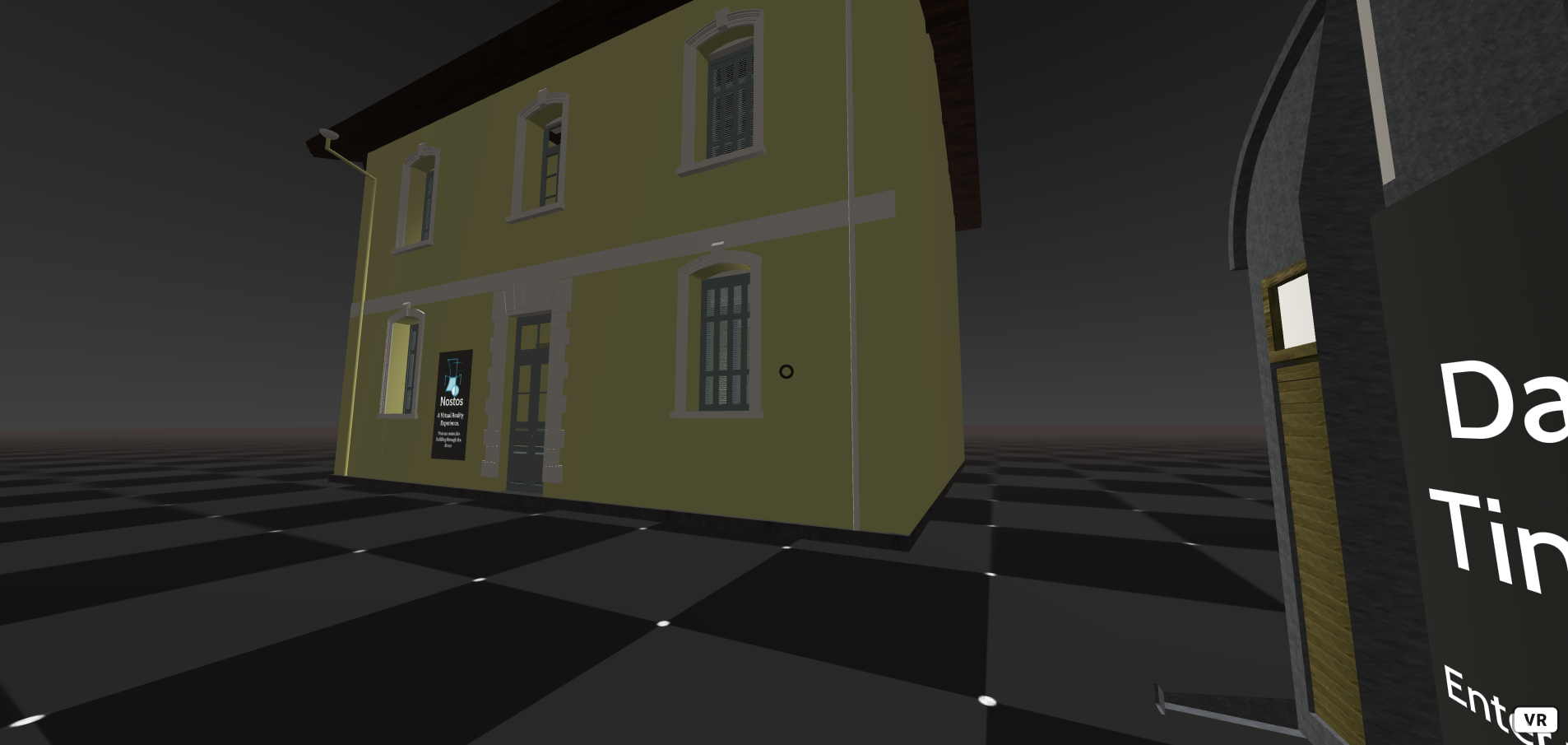
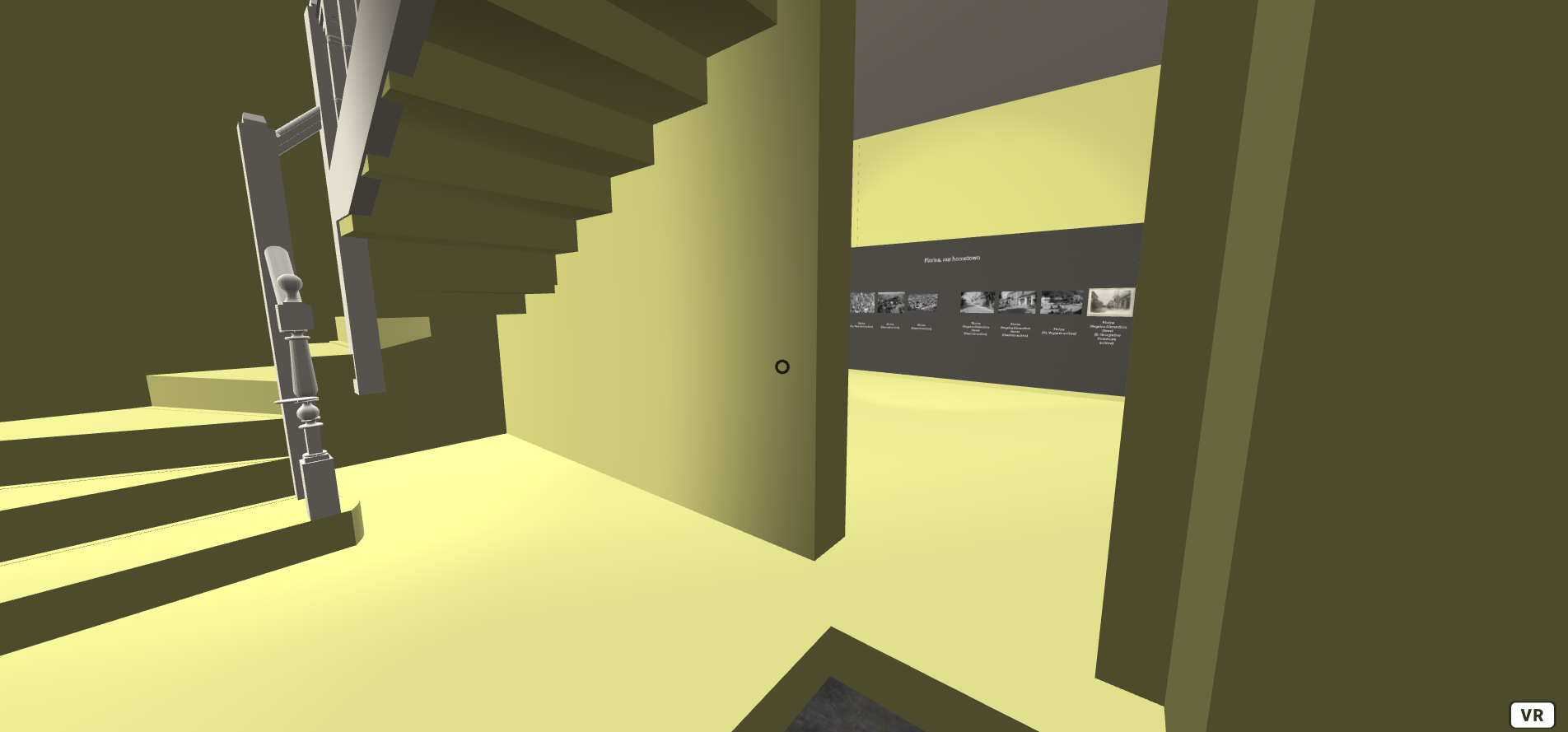
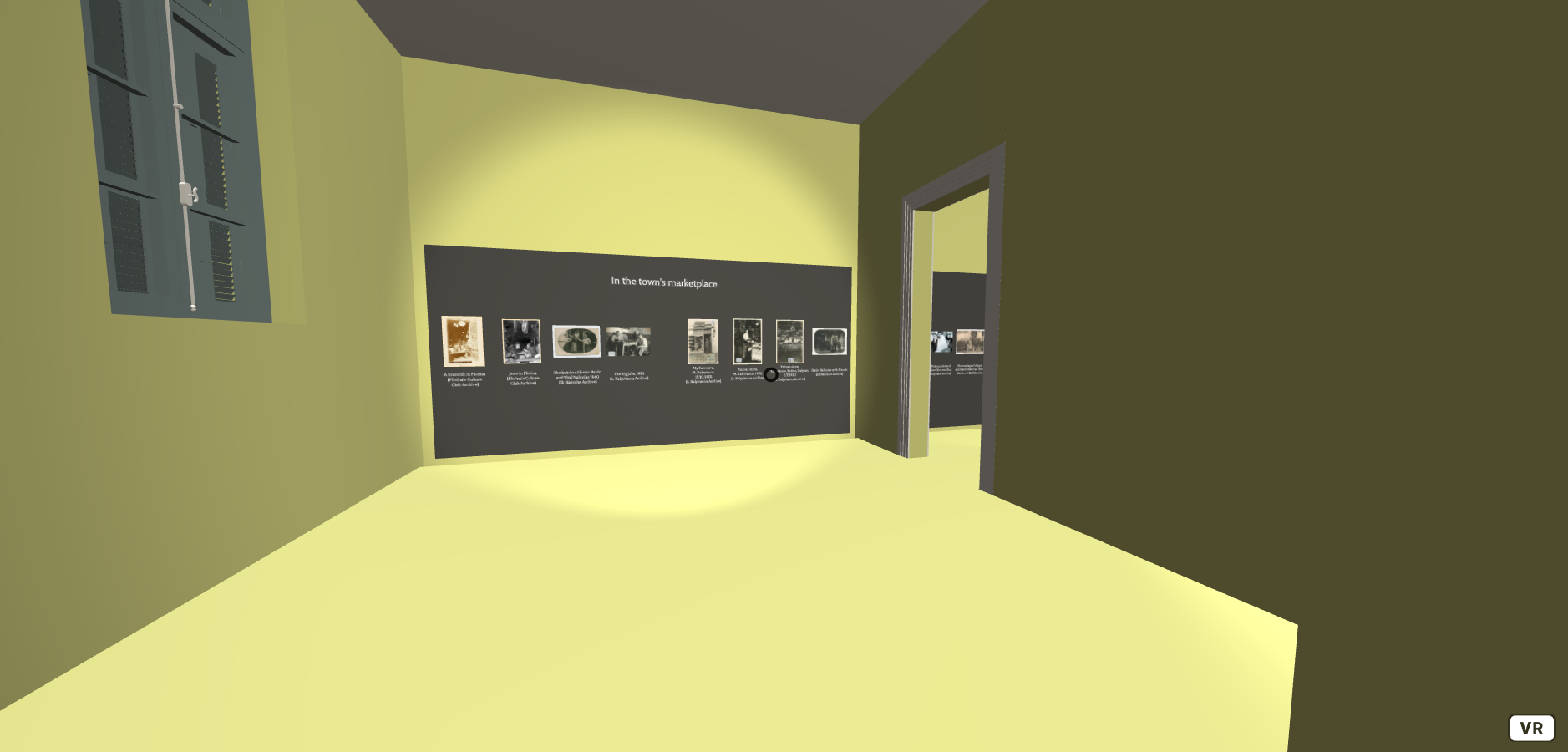
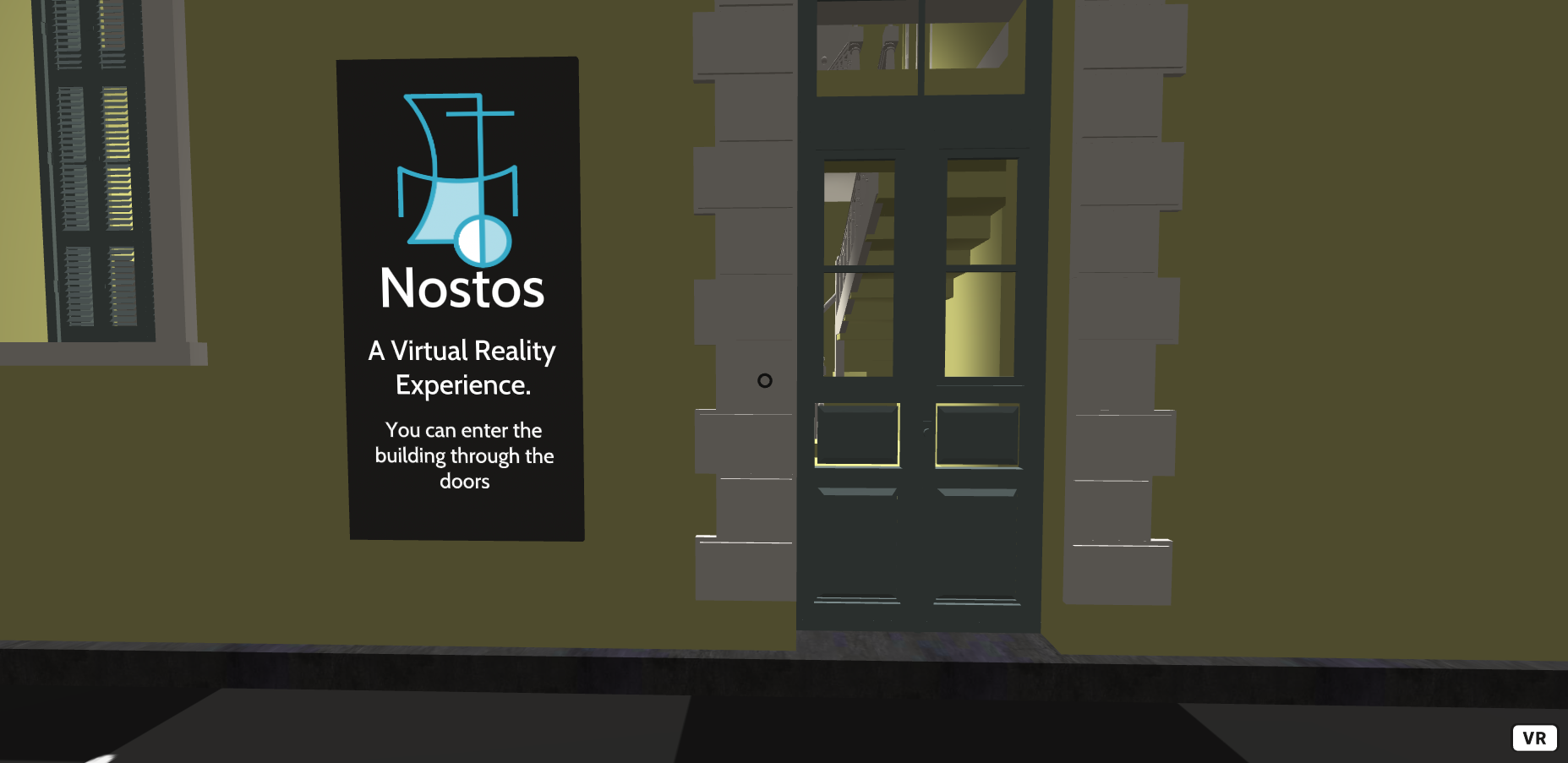
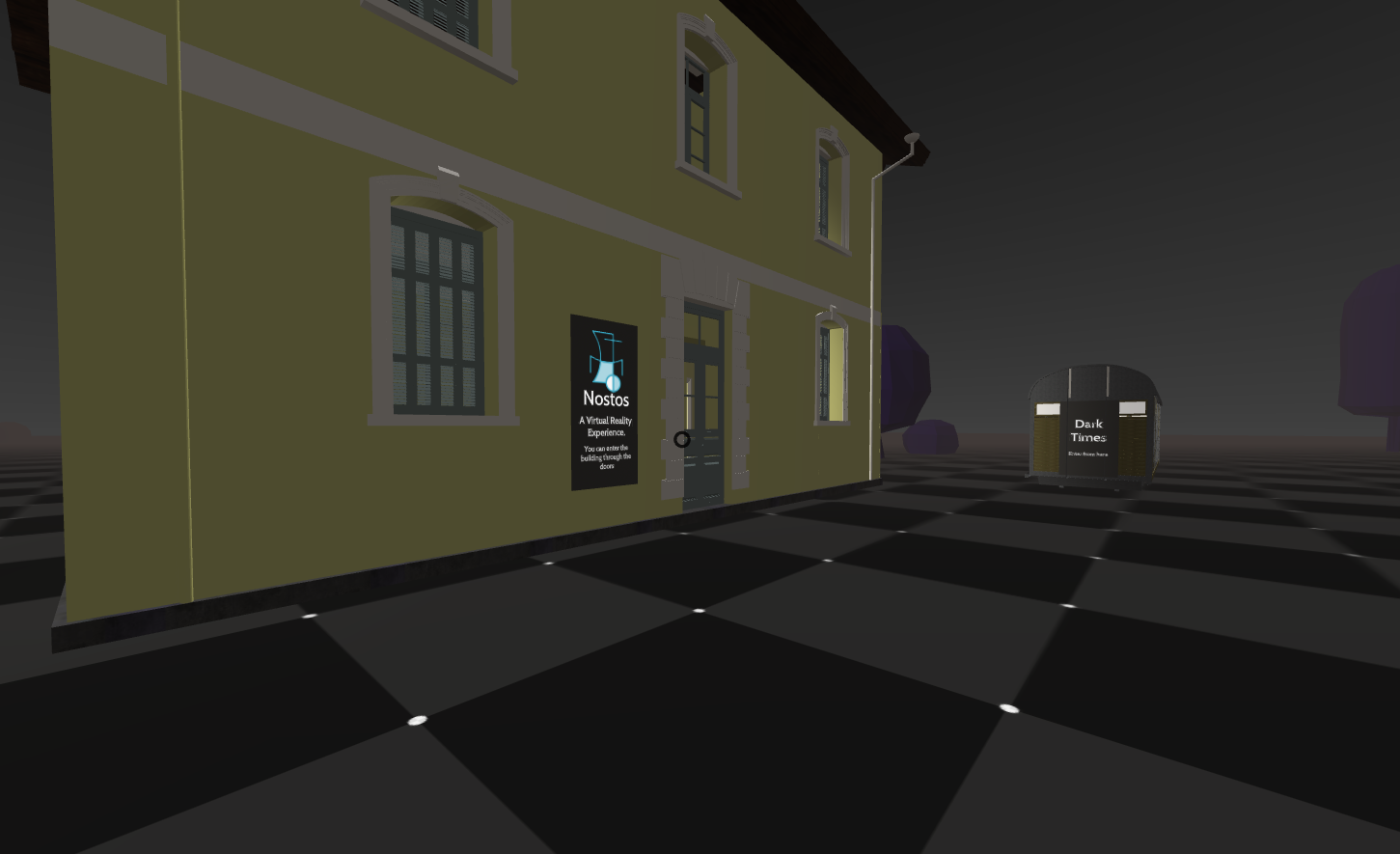
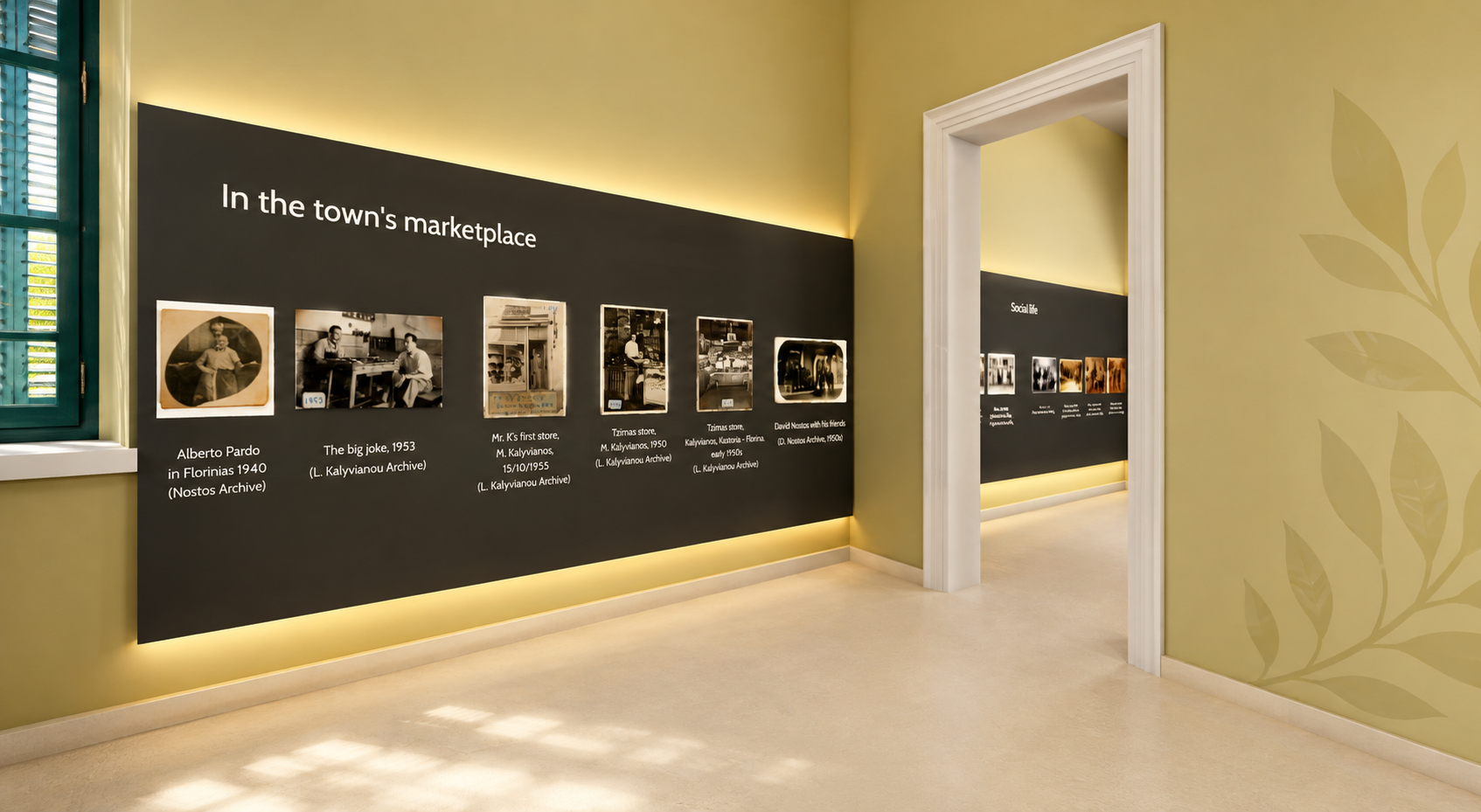
In Nostos VR, the starting point was not an abstract virtual space. It was a real building in Florina, a place that had hosted exhibitions and artistic activity in the city. Recreating a sense of that space mattered, because the building itself carried part of the experience. The visitor was not simply looking at images on a screen. They were entering a digital environment that referred to a real local place.
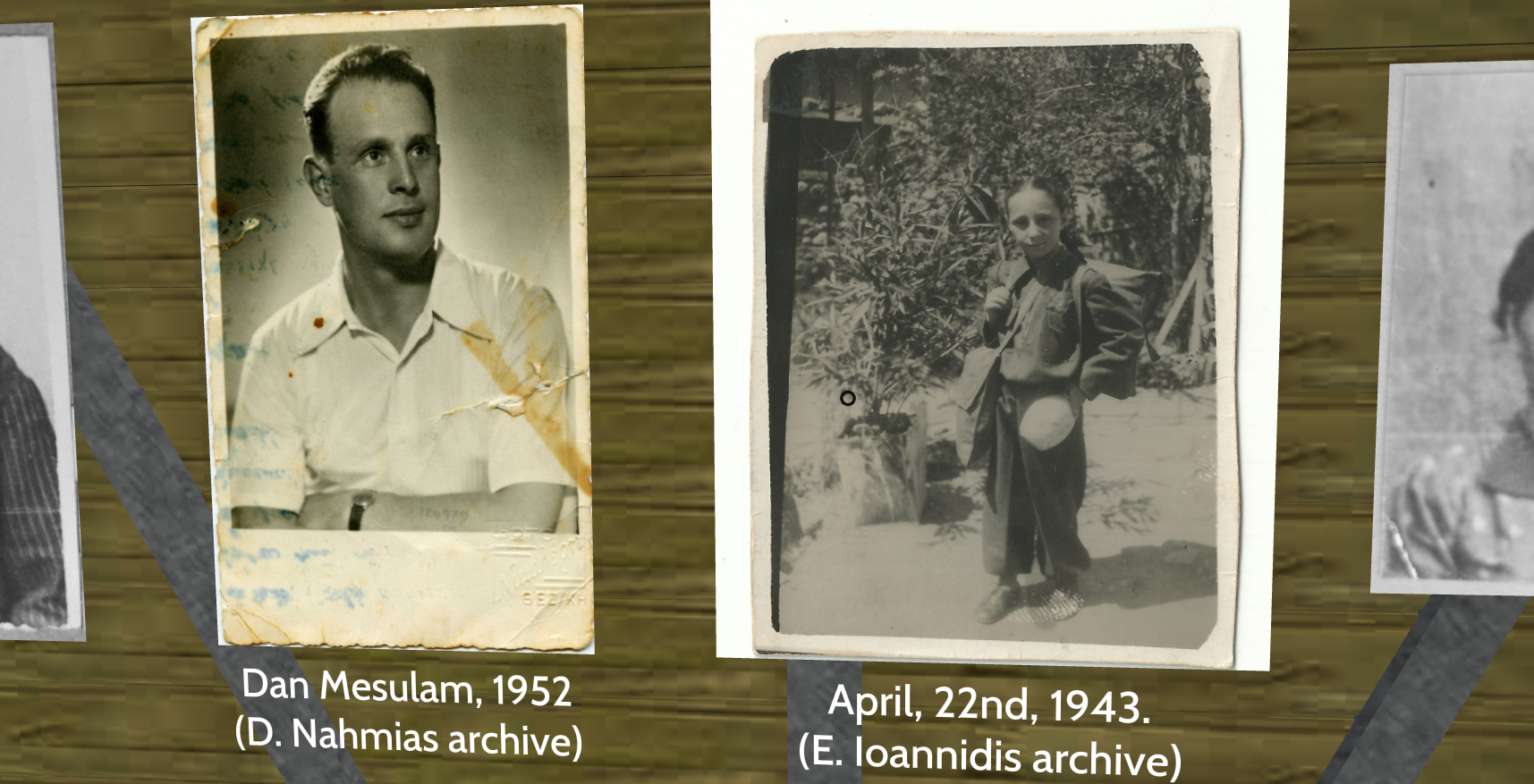
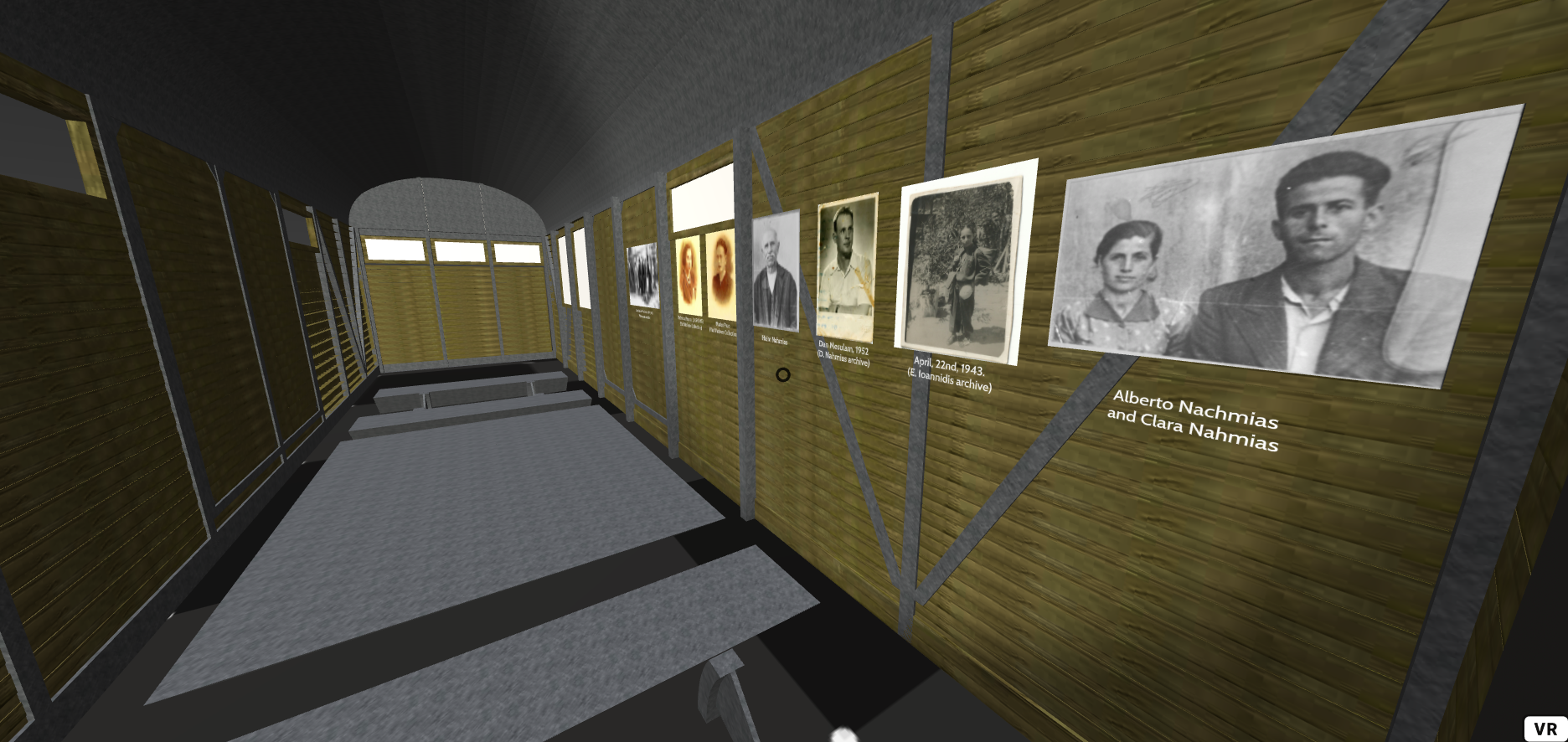
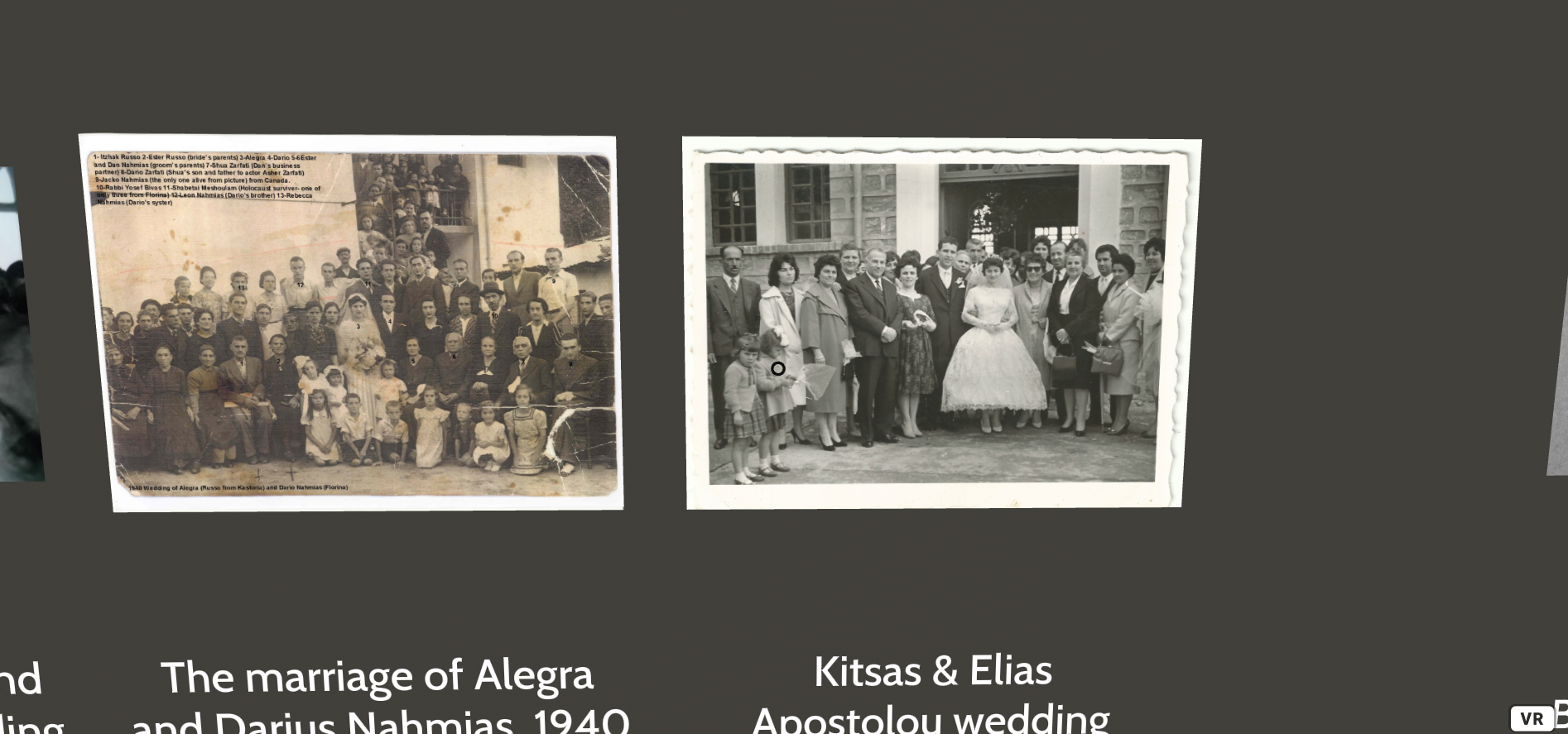
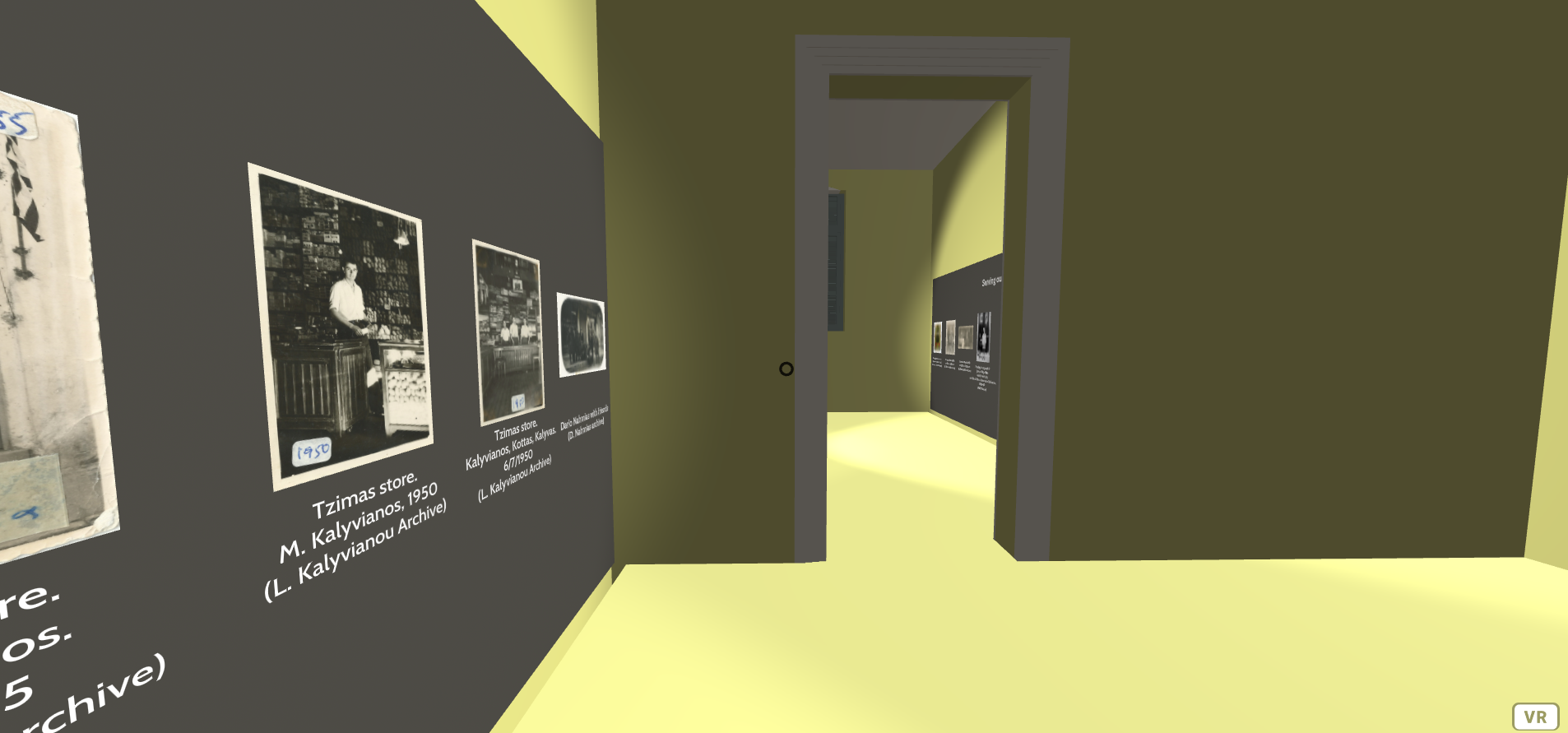
The photographic material was also central. Photographs are not neutral objects, especially when they are connected with community memory, displacement and loss. They need care, order and context. In a digital environment, the way photographs are placed, grouped and encountered can influence how visitors read them and how they emotionally approach the story.
Sound added another layer. Selected music and audio elements helped shape the atmosphere of the experience. This is easy to underestimate. In digital heritage, sound can guide attention, slow down the rhythm, create emotional continuity and help visitors feel that they are not simply browsing content, but entering a more reflective space.
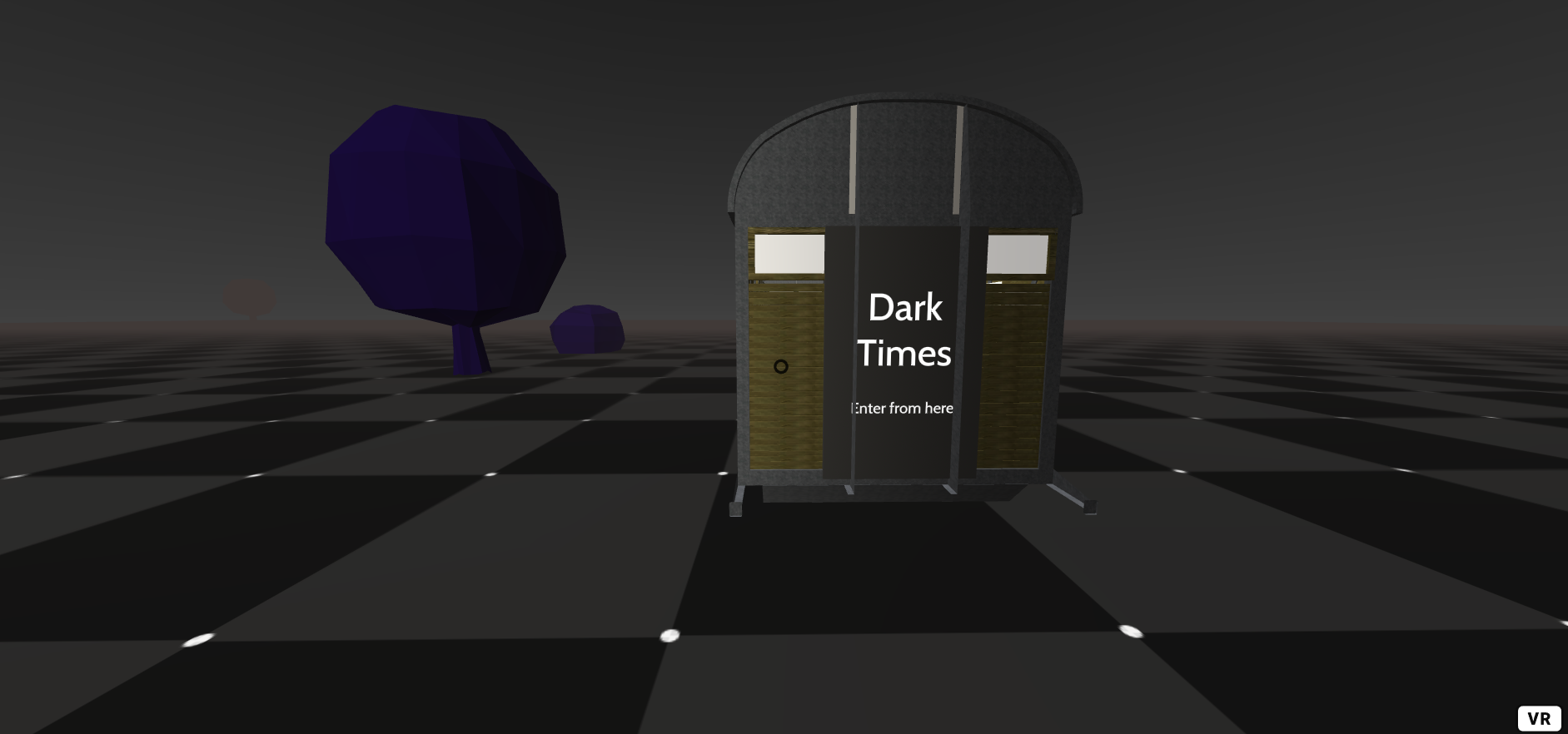
This is where tools such as A-Frame and Web VR become interesting for cultural and educational organisations. Their value is not only technical. They can help small teams create prototypes of digital experiences that run through the web and can be shared more easily with people who are not physically present.
Nostos VR was developed by two people. This matters, not as a detail about production, but as part of the lesson: meaningful digital heritage prototypes do not always need to begin with large teams or large budgets. They can begin with a clear story, careful choices and tools that make experimentation possible.
A prototype does not need to be perfect. In many cases, it should not try to be perfect. Its role is to help a team test an idea: Does the space make sense? Does the story flow? Does the visitor understand where to go? Does the technology support the experience, or does it get in the way? What needs to be added, removed or changed?
For small museums, cultural organisations, schools, NGOs and local communities, this is important. Many meaningful heritage ideas do not begin with large budgets or complete digital productions. They begin with a story, a place, a collection, a memory or a local question that deserves to be explored. Prototyping can make that first step possible.
Nostos VR showed us that a digital heritage experience can extend the life of a physical exhibition without pretending to replace it. It can offer access to people who are far away. It can help material remain visible after the exhibition has ended. It can invite new audiences to encounter local memory in another form. And it can help the creators think more deeply about the relationship between space, content, sound, technology and visitor experience.
This way of working is also connected with our Erasmus+ course AI for Cultural Heritage and Visitor Experience Design. In the course, we explore how cultural organisations, adult education providers and local communities can use digital tools, AI-assisted prototyping, local stories and Living Labs to design meaningful visitor and learning experiences.
Because digital heritage does not start with technology. It starts with a story that deserves to be experienced.