

AI for Cultural Heritage and Visitor Experience Design
Duration 5 days
25 learning hours
Participants
8-20
Language
English
Course fee
€400
Suitable for Erasmus+
KA1 staff mobility
Location
Florina, Greece
Pre-registration is free. No payment is required before the course edition is officially confirmed.
Course Overview
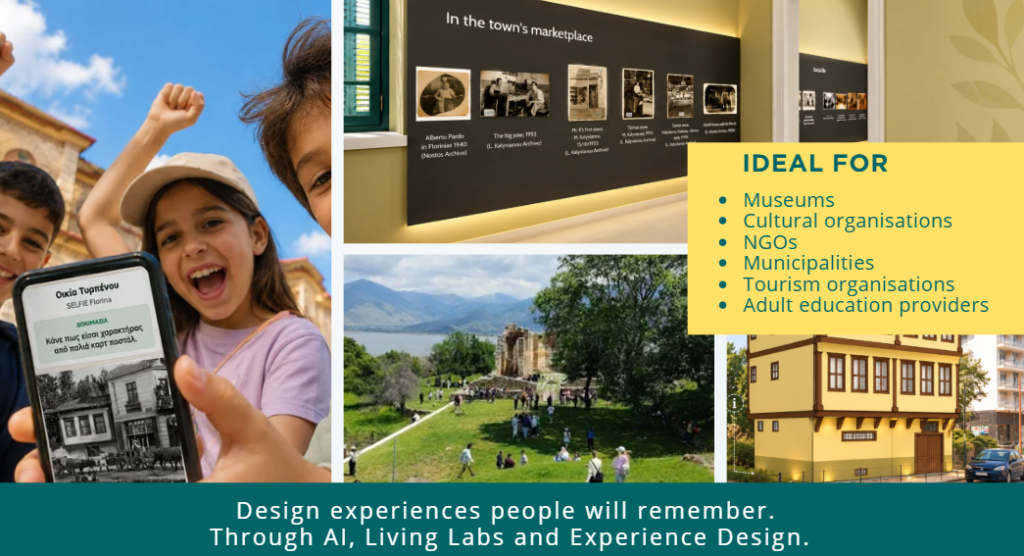
Digital technologies are transforming the way people experience museums, heritage sites, cultural organisations and visitor destinations. AI, AR, VR, geolocation and interactive storytelling create exciting new opportunities, but they also raise an important question:
How do you choose the right technology for the right experience?
This course takes a different approach. Instead of teaching individual technologies, it explores how to design meaningful visitor and learning experiences, and how to select and combine the technologies that best support them.
Throughout the week, you will work with real case studies, Living Labs and collaborative Design Studios to transform ideas into practical project concepts.
You will not leave with a collection of AI prompts. You will leave with the first version of a meaningful experience designed for your own organisation.
During the course you will:
- analyse real digital experiences developed by NEXUS Innovation and its partners;
- understand the design decisions behind successful visitor experiences;
- explore how AI, AR, VR, geolocation and storytelling can support different visitor and learning goals;
- develop a concept, AI-assisted prototype and implementation roadmap for your own organisation.
What Makes This Course Different?
A different way to learn. A different way to design.
Most courses introduce digital tools.
This course introduces a design mindset.
Instead of memorizing software features, you will practice building effective experiences for your audience and finding the exact tools required to make them work.
You will not simply discover what AI, AR or VR can do. You will learn when to use them, why to use them, and equally important, when not to use them.
Learn Experience Design
Design first. Technology second.
Learn Experience Design
Digital tools evolve rapidly, but meaningful experiences last. Learn how to design visitor and learning experiences before selecting the technologies that best support them.
Inside Real Projects
Learn from the complete design journey.
Inside Real Projects
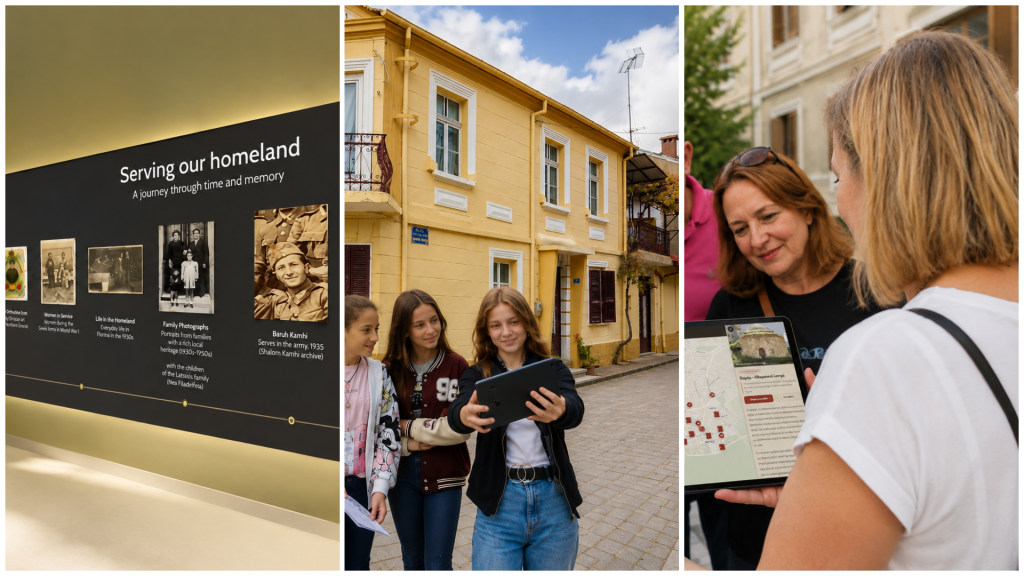
Instead of analysing hypothetical case studies, you will explore real projects designed, developed and implemented by NEXUS Innovation in collaboration with local communities, cultural organisations and public institutions. Discover how each project evolved from the first idea and early prototypes to testing, implementation and evaluation. Understand the design decisions, technology choices, challenges and lessons learned that shaped each experience.
Learn in Living Labs
The region becomes your classroom.
Learn in Living Labs
Urban spaces, museums, galleries and regional destinations become real design laboratories where ideas are tested, discussed and transformed into practical concepts.
Prototype with AI
Turn ideas into tangible concepts.
Prototype with AI
Use AI as a creative design partner to rapidly develop storyboards, visitor journeys and realistic prototypes that help communicate, test and refine ideas before implementation.
Return Home Ready to Act
Leave with more than inspiration.
Return Home Ready to Act
By the end of the course, you will have developed the first version of a project for your own organisation, including an experience concept, technology strategy, AI-assisted prototype and implementation roadmap.
How You Will Learn
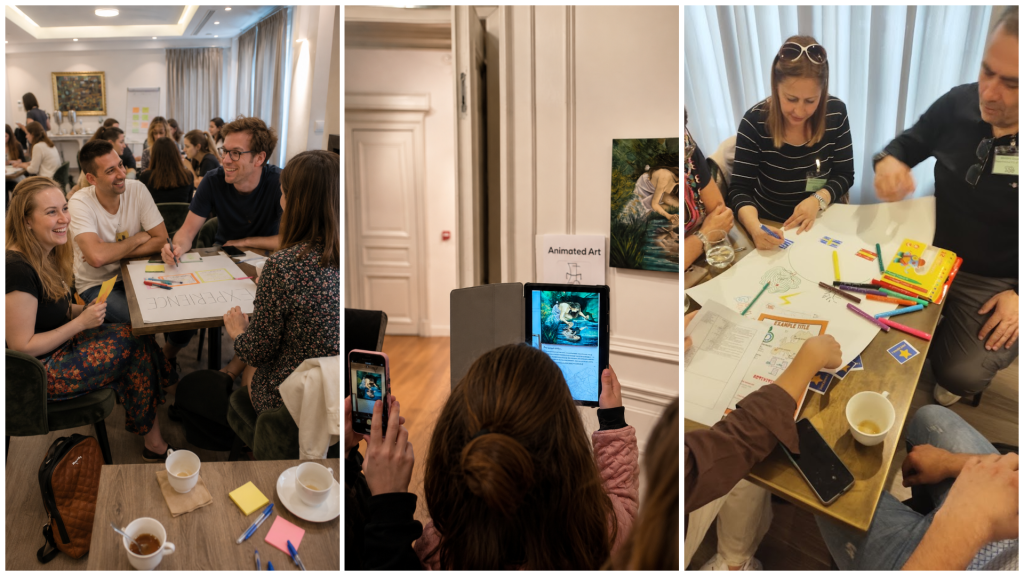
Every Living Lab and Design Studio follows the same learning cycle, transforming real experiences into practical solutions for your organisation.
The Experience Design Cycle
Experience
Explore authentic visitor experiences and discover how technology can enrich places, stories and communities.
Reflect
Analyse what works, why it works and how people experience it.
Design
Transform observations into practical ideas for your own organisation.
AI Prototype
Use AI to rapidly visualise, refine and communicate your concept.
Apply
Develop an implementation roadmap that you can discuss, present and further develop within your organisation.
Your 5-Day Learning Journey
The course includes 25 hours of structured learning activities combining Design Studios, Living Labs and project development.
Daily learning sessions usually take place from 10:00–13:00 and 14:00–16:00.
Lunch break: 13:00–14:00
Coffee breaks are provided throughout the learning sessions.
Field visits are an integral part of the course and are directly connected to the Design Studios, allowing participants to transform real experiences into practical concepts for their own organisations.
- Explore the principles of meaningful visitor experiences, discover emerging technologies and share the challenges of your own organisation.
- In the afternoon, explore Florina through two different in-house digital experiences that combine similar technologies with different design approaches. Compare how storytelling, interaction and game elements shape visitor engagement, and begin analysing the design decisions behind each experience.
✔ Organisational Challenge
Begin the day by reflecting on the previous afternoon's city exploration. During the first Design Studio, analyse the visitor experiences you encountered and transform your observations into ideas and concepts for your own organisation.
In the afternoon, visit a museum or cultural institution where digital technologies enhance interpretation and visitor engagement. Compare different design approaches and evaluate how different technologies support different visitor and learning goals.
.
✔ Urban Experience Concept
- Begin the day by reflecting on the previous afternoon's museum or cultural institution visit. During the second Design Studio, analyse how digital technologies support interpretation, storytelling and visitor engagement, and transform your observations into concepts for your own organisation.
- The afternoon is free for personal exploration, networking or optional cultural activities, giving you time to reflect on your ideas and further develop your project.
✔ Cultural Experience Concept
- Experience a full-day Living Lab in either the Prespa Lakes region or the Nymfaio–Arcturos–Amyntaion Winery area. Explore one of Northern Greece's most distinctive cultural and natural landscapes through the eyes of an experience designer.
- Working directly in the field, observe authentic visitor experiences, identify design opportunities and participate in an on-site Design Studio where ideas are developed, tested and refined within the context where they will be experienced.
✔ Regional Experience Insights
- Bring together everything you have explored throughout the week and transform your ideas into a complete project concept. Use AI to develop realistic prototypes, receive feedback from peers and trainers, and refine your proposal into a practical implementation roadmap for your own organisation.
- Leave the course with a project that is ready to be discussed, presented and further developed within your organisation.
✔ Prototype & Action Plan
Regional Living Labs Explore • Analyse • Design
Our Regional Living Labs are more than field visits. They are immersive design environments where participants explore authentic visitor experiences, analyse how places, stories, communities and technologies come together, and develop ideas for their own organisations.
Depending on the season, weather conditions and the profile of the group, one of the following Living Labs becomes the field-based learning environment for the course.
Every course edition includes one Regional Living Lab. The destination is selected to provide the richest learning experience for each group.
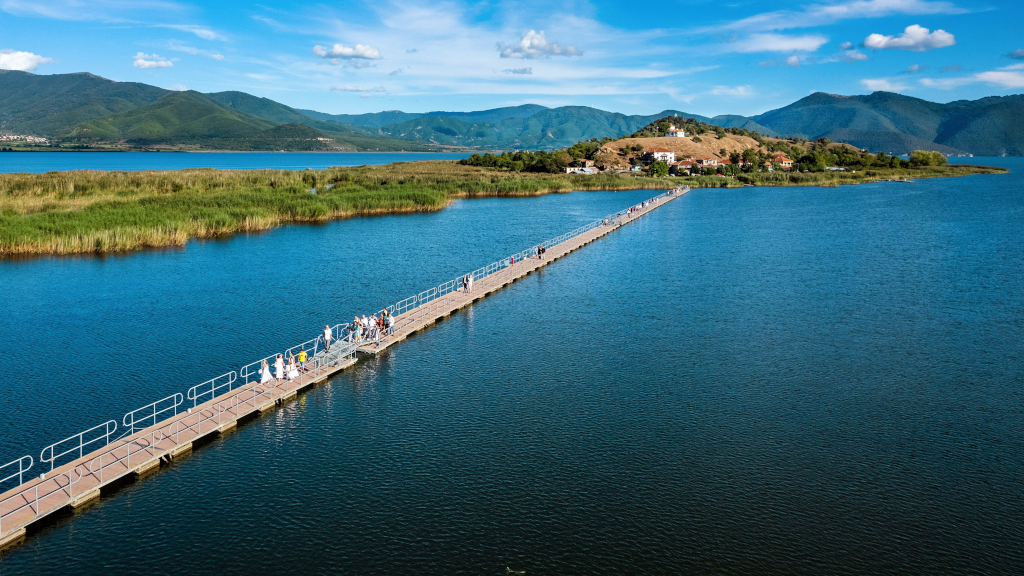
Prespes Lakes Living Lab

Observe
Explore how landscape, history and local communities shape memorable visitor experiences.
Analyse
Discover how storytelling, interpretation and technology influence engagement in authentic settings.

Design
Identify opportunities to create meaningful and interactive experiences without losing authenticity.
Transfer
Adapt the insights and design principles to your own organisation and professional context.
Nymfaio • Arcturos • Amyntaio Living Lab
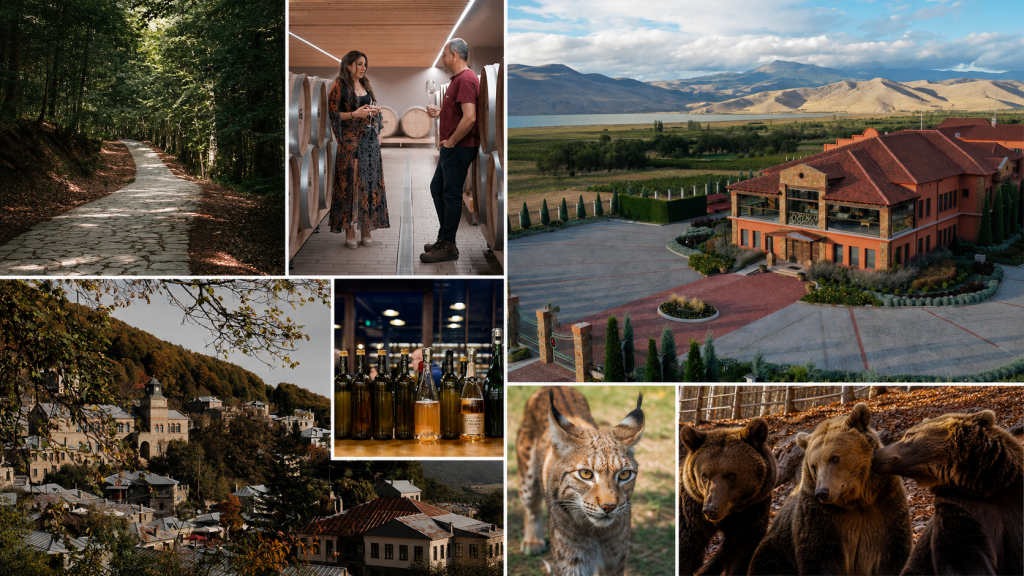
This alternative Regional Living Lab combines heritage villages, wildlife conservation and visitor-oriented businesses to demonstrate how different organisations create distinctive visitor experiences. Participants compare different approaches to interpretation, storytelling and visitor engagement while exploring how technology can support, rather than replace, the authenticity of each place.
Different places. Same design process. Every Regional Living Lab follows the Experience Design Cycle: Explore → Reflect → Design → Prototype → Apply.
Your Final Project Portfolio
Throughout the week, each participant develops a project tailored to the needs of their own organisation. By the end of the course, ideas, observations and design decisions are brought together into a practical Project Portfolio that supports future implementation, collaboration and funding applications.
Organisation Challenge: A clearly defined challenge or opportunity.
Experience Concept: The overall vision of the experience.
Visitor Journey: Key moments of the visitor experience.
Technology Strategy: Why each technology was selected, and how they work together.
AI-assisted Prototype:Storyboard, mock-up or interactive prototype.
Implementation Roadmap: The next practical steps for turning the concept into reality.
Your portfolio is not the end of the course. it is the starting point for your next project.
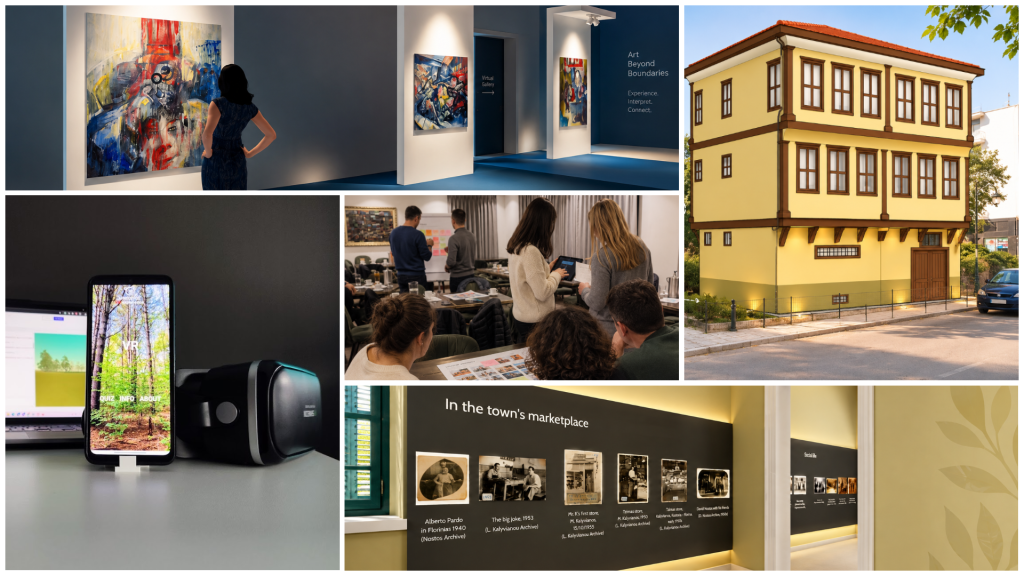
Technologies You Will Explore
Throughout the course, participants explore a range of digital technologies, not as isolated tools, but as components of meaningful visitor and learning experiences. The focus is not on mastering the technologies themselves, but on understanding when, why and how they create value.
Artificial Intelligence
Generate ideas, create prototypes and personalise visitor experiences.
Mobile Experiences
Support self-guided exploration, participation and interaction.
Virtual Reality
Reconnect visitors with inaccessible places, memories and historical contexts.
Augmented Reality
Reveal hidden stories and enrich physical environments.
Geolocation
Connect digital content to real places through location-based exploration.
Storytelling
Bring together places, people and technologies into meaningful experiences.
Venues for the Design Studios
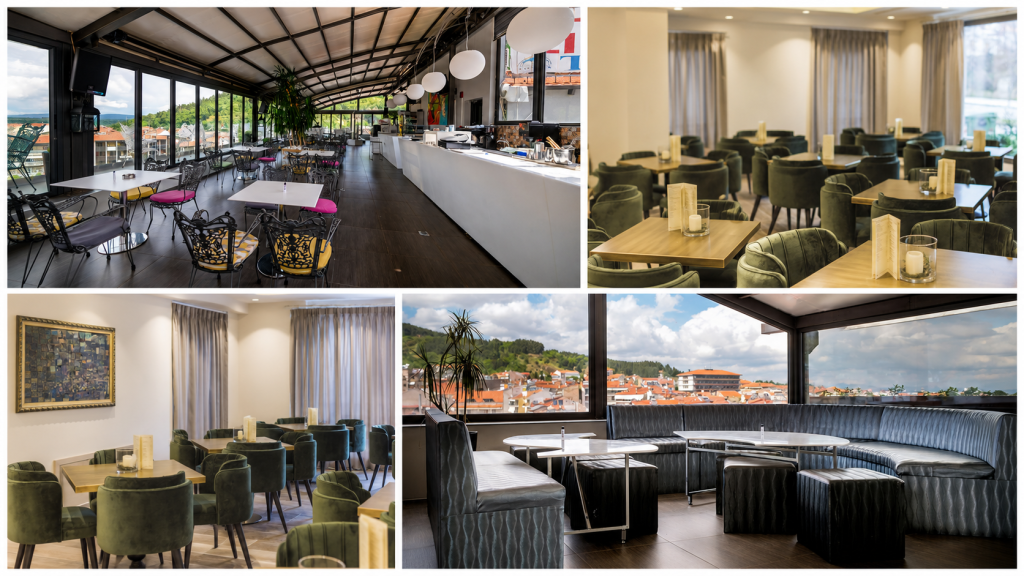
The course is delivered in carefully selected training venues in Florina. Depending on the number of participants and venue availability, workshops take place either at Emerald Suites Hotel or Lingos Hotel.
Both venues provide a comfortable and collaborative environment for Design Studios, group work and reflection, supporting the transition from field experiences to project development.
Our training venues are selected to support an effective learning experience, including:
- high-speed WiFi for AI-assisted design, rapid prototyping and online collaboration;
- large presentation screen for collaborative design sessions and project presentations;
- power access for laptops and devices;
- comfortable seating and workspace for individual, pair and group work;
- a friendly atmosphere that supports interaction, reflection and collaboration.
Participants are encouraged to bring their own laptops, as the course includes collaborative design activities, AI-assisted prototyping and the development of a Final Project Portfolio.
When needed, a limited number of shared laptops may be provided for pair or group work. Guidance on accessing and using the selected AI, AR, VR and other digital tools is provided throughout the course.
The final venue is confirmed before each course edition to ensure the best learning environment for the group size and planned activities.
Cost & What’s Included
Course fee
- 25 hours of structured learning activities
- Experience Design Studios and collaborative workshops
- AI-assisted prototyping activities
- Training materials, design templates and digital resources
- Access to NEXUS Living Labs and real project case studies
- Development of your Final Project Portfolio
- Certificate of Attendance
- Europass Mobility documentation (where applicable)
Local Living Lab & Catering Package
- Five working lunches
- Coffee breaks throughout the course
- Local transport for the Regional Living Lab
- Entrance fees (where applicable)
- The final amount is confirmed together with the official course confirmation, as transport and entrance costs may vary depending on the selected Regional Living Lab and the final number of participants.
Not Included
- International travel to Greece and Florina
- Accommodation
- Dinners
- Personal expenses
- Optional cultural or networking activities, unless specified
This course is designed to be eligible for Erasmus+ KA1 Staff Mobility funding. Many participants can receive Erasmus+ funding to cover the course and related mobility costs. Please contact your National Agency or institution for information about funding opportunities.
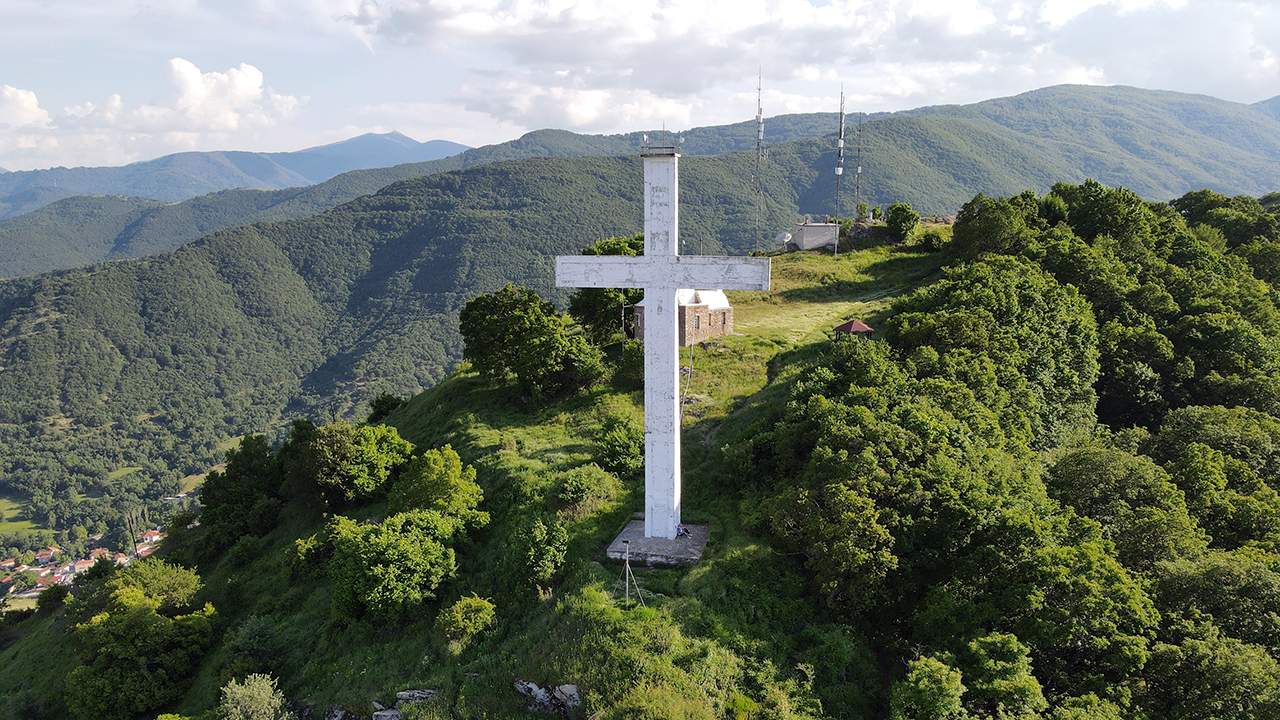
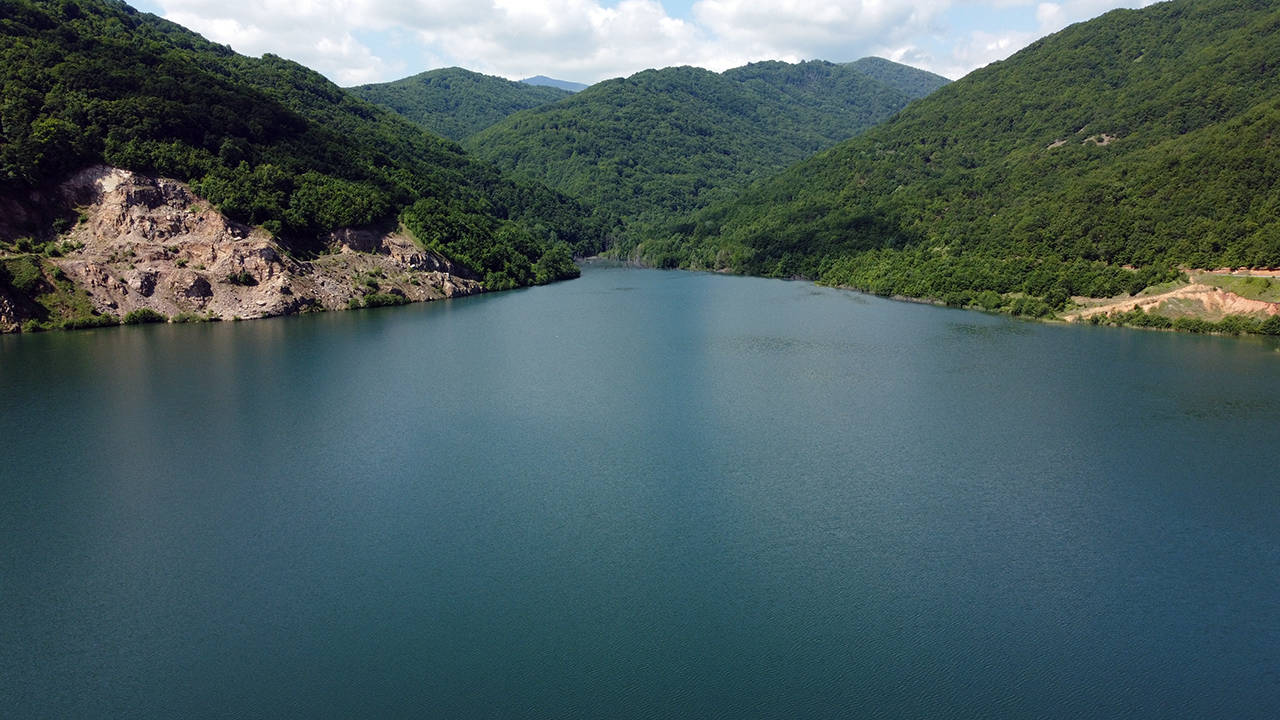
Discover Florina A Hidden Gem in Northern Greece
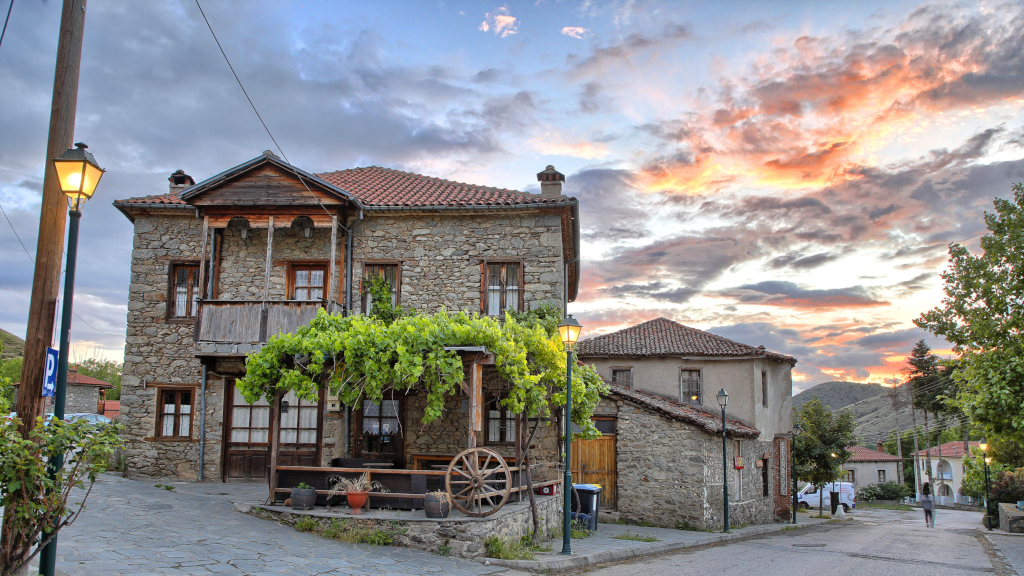
Nestled in the mountains of Western Macedonia, Florina is a small, calm and welcoming town with a distinctive cultural and artistic character. Known for its riverside promenade, traditional architecture, surrounding landscapes and creative atmosphere, Florina offers an ideal setting for a focused and reflective training week.
Its size makes it easy for participants to move around, meet informally after the sessions and experience the local atmosphere during their stay. The town combines nature, culture and everyday life in a way that supports both professional learning and intercultural exchange.




Most international participants reach Florina through Thessaloniki, the nearest major international airport. From Thessaloniki, travel to Florina can be arranged by public transport or transfer options, depending on participants’ arrival times and group needs.
Accommodation is not included in the course fee. However, NEXUS Innovation can suggest hotels and accommodation options close to the training venue, so that participants can choose what best fits their needs and Erasmus+ budget.
Once a course edition is officially confirmed, registered participants receive a practical information pack with guidance on travel, accommodation, local transport, the training venue, the Prespes Field Learning Lab and optional cultural activities.
Participants should not book flights or accommodation before receiving the official confirmation of the course edition.
FAQ
Yes. The course has been specifically designed for Erasmus+ KA1 Staff Mobility and follows the structure expected for professional training activities. Participants receive 25 hours of structured learning, clearly defined learning outcomes, a Certificate of Attendance, and support for Europass Mobility documentation, where applicable.
The tuition fee is €400 per participant for the complete 5-day training programme. The Local Living Lab & Catering Package is listed separately, as its final cost depends on the selected Regional Living Lab and the final number of participants. Full details are available in the Cost & What's Included section.
Each course edition is confirmed once the minimum group size of 8 participants has been reached. We aim to confirm every edition by the published confirmation date, giving participants enough time to arrange travel and accommodation.
No. Please wait until you receive the official course confirmation from NEXUS Innovation before booking flights or accommodation. This ensures that your travel arrangements are made only after the course edition has been confirmed.
If a course edition is not confirmed by NEXUS Innovation, you will not be charged any course fee. If you have already made a payment, you may choose between a full refund or a transfer to another available course edition.
Yes, we recommend bringing your own laptop. Throughout the course, you will use AI, digital storytelling, maps, images and other digital resources while developing a project for your own organisation and creating your Final Project Portfolio.
A limited number of shared laptops may be available for pair or group work if needed.
Participants are encouraged to bring a real challenge, idea or opportunity from their own organisation that they would like to develop during the course. This could relate to a museum exhibition, visitor experience, cultural event, heritage site, educational programme or any other project involving places, stories, collections or communities.
If you do not yet have a specific project in mind, don't worry. During the course, you will have the opportunity to identify and develop a suitable challenge together with the facilitators.
More detailed preparation guidance will be included in the practical information pack sent before the course.
No. No advanced technical skills are required. The course focuses on experience design and on choosing the right technologies for each context—not on programming or software development.
Throughout the week, you will work with practical, easy-to-use digital tools while learning how to evaluate, combine and prototype ideas for meaningful visitor and learning experiences.
Our goal is not to turn you into a technology expert, but to help you make informed design decisions for your own organisation.
A Regional Living Lab is a structured field-based learning experience where participants explore authentic visitor experiences in real cultural, natural and community settings. Rather than simply observing, they analyse how places, stories, people and technologies come together to create meaningful experiences.
The observations, photos, discussions and ideas collected during the visit become the starting point for the Design Studios, where participants develop concepts and prototypes for their own organisations.
Every course edition includes one Regional Living Lab, selected according to the season, weather conditions and the profile of the participant group.
Yes. The Regional Living Labs are an integral part of the 25-hour structured learning programme. They are carefully designed field-based learning experiences where participants analyse authentic visitor experiences and use their observations to develop concepts and prototypes during the Design Studios.
Optional cultural and networking activities may also be organised outside the formal programme to encourage informal discussion and intercultural exchange.
No. Accommodation is arranged individually so that participants can choose the option that best fits their needs and budget.
Once the course edition has been confirmed, NEXUS Innovation provides recommendations for nearby hotels, practical travel information and local guidance to help participants plan their stay in Florina.
Yes. Participants receive a Certificate of Attendance, confirmation of 25 learning hours, a detailed course programme, and their Final Project Portfolio developed during the course.
Support for Europass Mobility documentation is also provided where applicable.
Yes. The course is designed for professionals who create, manage or support visitor and learning experiences in many different contexts, including museums, cultural organisations, municipalities, NGOs, adult education providers, tourism organisations and protected areas. What participants have in common is not their profession, but their interest in designing meaningful experiences for people.
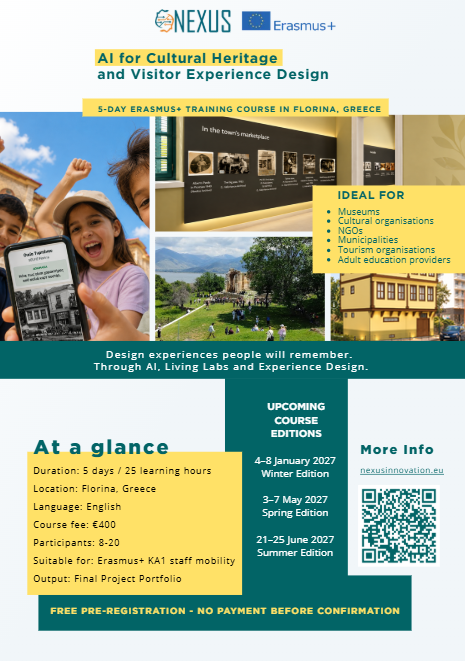
Upcoming Course Editions
Free pre-registration, no payment before confirmation.
-
4–8 January 2027
Winter Edition. Confirmation by 4 November 2026
-
3–7 May 2027
Spring Edition. Confirmation by 3 March 2027
-
21–25 June 2027
Summer Edition. Confirmation by 21 April 2027
Minimum: 8 participants
Ideal group: 12–20 participants
Do not book travel before official confirmation.
How Registration Works
- Submit the free pre-registration form.
- NEXUS will contact you with practical information about the course.
- The course is confirmed once the minimum number of participants has been reached.
- No payment is required before official course confirmation.
- Please book your travel only after receiving the official confirmation email.
Cancellation Policy
Pre-registration is free of charge.
If a course edition is not confirmed by NEXUS Innovation, no course fee is charged. Any payment already made will be fully refunded or transferred to another course edition, according to the participant’s preference.
After official course confirmation:
- More than 4 weeks before the course: Full refund or free transfer to another course edition.
- 2–4 weeks before the course: Transfer where possible, or refund minus €80 administrative costs.
- Less than 2 weeks before the course: Refund cannot be guaranteed, although transfer to another course edition may be offered where possible.
Participant substitutions from the same organisation are accepted before the course starts.
Certificate and Documentation
Participants receive:
- Certificate of Attendance
- Final Project Portfolio
- Detailed course programme
- Confirmation of 25 learning hours
- Europass Mobility support (where applicable)
Meet Your Facilitators
The course is facilitated by the multidisciplinary team of NEXUS Innovation, bringing together expertise in education, digital innovation, experience design and European project development.
Our facilitators combine many years of experience as educators, researchers and project designers with extensive involvement in Erasmus+ initiatives, digital innovation and the development of participatory learning experiences. Rather than presenting theory alone, they share the complete design journey behind real projects developed in collaboration with museums, local communities, cultural organisations and public institutions.
Throughout the course, participants explore not only the final outcomes of these projects, but also the ideas, design decisions, prototypes, challenges and lessons learned along the way. The training approach is practical, collaborative and reflective, enabling participants to work alongside the NEXUS team while developing a project tailored to the needs of their own organisation.
The training approach is practical, collaborative and reflective, combining real projects, Living Labs and AI-assisted design with continuous discussion and peer learning.
Course Goals
- Design meaningful visitor and learning experiences that combine places, stories, collections and communities.
- Select the most appropriate digital technologies—including AI, AR, VR and location-based tools—according to the goals of each project.
- Analyse existing visitor experiences and identify opportunities for innovation, participation and engagement.
- Apply a structured experience design process to transform observations into practical concepts and implementation plans.
- Develop AI-assisted prototypes that communicate ideas effectively to colleagues, partners and stakeholders.
- Create a Final Project Portfolio including an experience concept, technology strategy, prototype and implementation roadmap for their own organisation.
- Transfer the methods and design principles explored during the course to new cultural, educational or community contexts.
Target Audience
This course is ideal for professionals who design, manage or support visitor and learning experiences, including:
- Museum and cultural heritage professionals
- Staff of cultural organisations, galleries and visitor centres
- Adult Education and VET providers
- Municipalities and public organisations working in culture, tourism or community engagement
- NGOs and community organisations developing educational or cultural projects
- Professionals working in nature interpretation, protected areas and environmental education
- Destination management, tourism and visitor experience professionals
- Consultants, project managers and innovation teams involved in cultural, educational or regional development initiatives
